
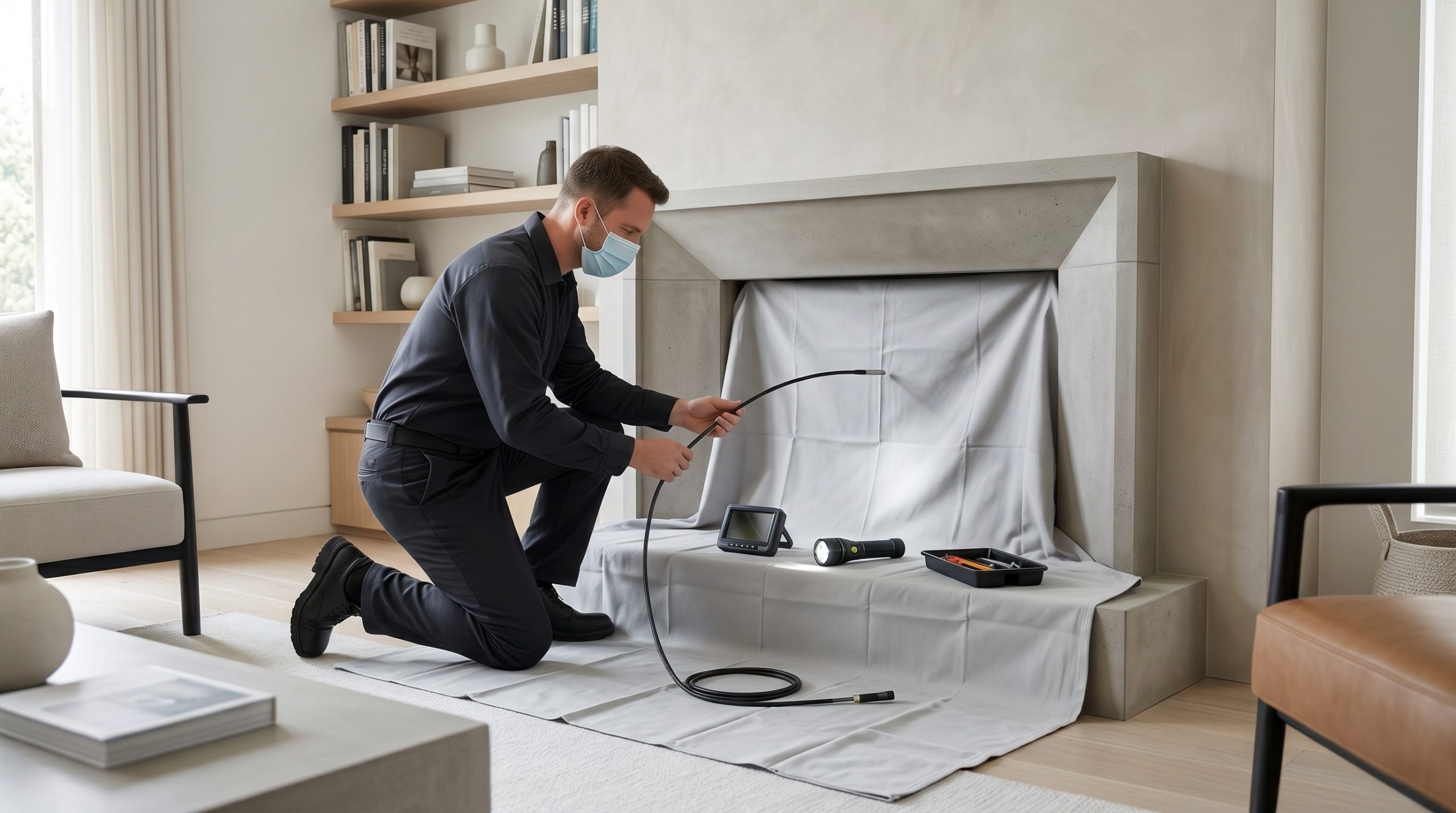
Does Your Fireplace Need Inspection? Expert Advice Inside!
Fireplace inspections detect hidden problems before they become serious safety hazards or expensive repairs. Issues such as creosote buildup, flue cracks, blocked ventilation, and moisture damage can develop within the chimney system without obvious warning signs. Catching them early keeps your fireplace safe, improves heating efficiency, and prevents damage from spreading to other parts of your home.
The Connecticut Department of Consumer Protection reports that chimney fires cause roughly 25,000 incidents and over $125 million in property damage across the U.S. each year. Most of these fires are linked to preventable issues that go unnoticed until major damage occurs.
Even when your fireplace appears to function normally, hidden wear inside the system can still create serious risks. Understanding why and when your fireplace needs a professional inspection is essential to maintaining a safe and efficient home.
Do Fireplaces Really Need Annual Inspections?
Yes, every burn cycle exposes your chimney system to intense heat, corrosive gases, and moisture. These hazards gradually compromise the system’s components, which are largely out of sight.
A fireplace can appear fully functional while quietly developing serious structural and combustion problems within. Damage from one season compounds into the next without any obvious warning signs. Common problems that reach a critical stage without annual monitoring include:
- Creosote accumulation
- Flue liner cracks
- Damaged dampers
- Moisture intrusion
An annual fireplace inspection helps catch and address these issues before they become expensive or dangerous. Left unchecked, any one of these problems can compromise your fireplace’s safety and significantly increase your repair costs.
Warning Signs Your Fireplace Needs a Chimney Safety Inspection
Smoke entering your room is one of the most common warning signs. This usually points to:
- Poor draft performance
- Chimney blockage
- Restricted airflow
- Heavy creosote buildup inside the flue
Do not ignore visible damage, such as:
- Cracked firebox surfaces
- Loose chimney bricks
- White staining on masonry
- Rust around fireplace components
These signs often indicate heat damage or moisture penetration inside the chimney structure. Both issues weaken masonry over time and accelerate deterioration. Nests and debris can also block ventilation and increase fire risks.
If your fireplace has not been used for several years, consider a professional inspection before operation. At Fireplace World, we help you spot early fireplace issues and provide expert inspections and servicing to keep your system safe and reliable.
What Happens During a Professional Fireplace Inspection?
A professional inspection evaluates the condition, safety, and functionality of your entire fireplace system. The goal is to identify hidden problems that may affect safe operation or long-term performance. Most inspections include evaluation of:
- Flue liner condition
- Creosote buildup levels
- Chimney cap integrity
- Damper functionality
- Masonry condition
- Ventilation performance
A Level 1 inspection is the standard service for regularly maintained fireplaces with no known issues. A Level 2 inspection is more detailed and required during home sales, renovations, or after severe weather events. This level may include internal camera scanning to detect hidden damage.
A Level 3 inspection is only performed when serious concealed hazards are suspected. It may require limited access to hidden chimney areas to evaluate structural damage safely.
Chimney cleaning and inspections are not the same service. Cleaning removes soot and creosote, while inspections evaluate the overall safety and structural condition of the system.
How Often Should Different Fireplace Types Be Inspected?
Inspection frequency depends on the type of fireplace you use and how often it operates. Different systems produce different levels of residue, heat exposure, and wear. Keeping a fireplace maintenance checklist helps you track inspection schedules and stay on top of servicing needs for your specific system.
Wood-burning fireplaces require yearly inspections because they produce creosote during normal use. Heavy fireplace use may also require more frequent cleaning. Other systems that still require inspections include:
- Gas fireplaces
- Pellet stoves
- Outdoor fireplaces
- Older masonry systems
Gas fireplaces burn cleaner, but venting systems and ignition components can still develop safety problems. Pellet stoves require inspections to ensure exhaust systems remain clear and mechanical components function correctly. Scheduling your annual fireplace inspection in early fall allows time for repairs before peak winter use begins.
How to Choose the Right Fireplace Inspection Professional
The quality of the inspection directly affects your fireplace safety and long-term repair costs. When evaluating a professional, look for:
- CSIA certification
- Proper licensing
- Insurance coverage
- Detailed written inspection reports
- Experience with your specific fireplace type
Always ask whether the inspection includes internal camera scanning. Written reports are especially valuable for insurance documentation and property sales. Avoid contractors who offer unusually low prices or recommend immediate repairs without documented evidence.
Frequently Asked Questions
Does a New Fireplace Still Need an Inspection?
Yes, even newly installed fireplaces should be inspected after the first full burn season. Installation errors, settling, and initial heat exposure can create issues that are not visible at the time of installation. An early inspection establishes a performance baseline and catches any problems before they develop further.
How Long Does a Fireplace Inspection Take?
Most fireplace inspections take between 30 minutes and two hours. The exact time depends on the system’s condition and the required inspection level.
More detailed assessments that include camera tools may take longer. Complex chimney systems or older structures also extend the process.
How Much Does a Fireplace Inspection Cost?
Inspection costs vary depending on the level of assessment required and your location. A basic inspection costs less than a detailed Level 2 assessment that includes internal camera scanning. Either way, inspection costs are considerably lower than the costs of chimney repairs or liner replacements when problems go undetected.
Schedule Fireplace Inspections Today To Keep Your Home Safe
Regular fireplace inspections are the most cost-effective way to protect your home from hidden chimney damage. They keep your fireplace safe, efficient, and problem-free. Working with a certified professional ensures hidden problems are accurately identified and properly addressed.
At Fireplace World, we are the trusted choice for fireplace sales, installation, maintenance, and custom masonry in the Terre Haute and Wabash Valley area. Our expert team handles everything from pre-season inspections and repairs to full custom-built indoor and outdoor fireplace spaces.
Whether you need a new installation, routine servicing, or a custom surround, we make the process easy so you can get back to enjoying your fireplace. Contact us today for expert fireplace solutions.